
Filter Products
Filter Products
CAD/CAM













As low as
$149.83What is CAD/CAM dentistry?
CAD/CAM dentistry uses high-tech software and hardware to digitally design and manufacture restorations, providing for efficient, accurate production of crowns, veneers, inlays, onlays, bridges, and implant abutments. This allows dentists to deliver customized care.
The principle of CAD/CAM dentistry relies on three separate functional phases:
- Digitization: Capturing the oral environment into a virtual 3D model.
- Design (CAD): Utilizing specialized software to propose and customize the restoration.
- Manufacturing (CAM): Physical production through subtractive milling or additive 3D printing.
For practice owners, this technology means moving from guesswork to precision. Traditional methods depend on physical impressions and manual skill, while digital workflows eliminate such variables, yielding better-fitting restorations with fewer adjustments in less time.
What is the workflow process when utilizing CAD/CAM in dentistry?
- The process starts with digital scanning to capture 3D images of the patient’s teeth.
- The scanned data is used to design a custom restoration using specialized CAD software.
- Once the design is approved, CAM technology mills or 3D prints the restoration using high-quality materials.
- The finished restoration is fitted, adjusted if necessary, and permanently placed in a single appointment.
- The dentist controls the process to ensure efficient, patient-focused care throughout.
What is the scanning process used in the CAD/CAM workflow?
Modern intraoral scanners use optical wands to capture thousands of images per second, creating a 3D surface model of the patient's hard and soft tissues. This process offers immediate feedback. If the margin is unclear or moisture contamination occurs, the software instantly highlights the error. You can simply re-scan that specific area without redoing the entire arch—a luxury not possible with traditional trays.
Benefits beyond the impression:
- Patient Comfort: The gag reflex caused by bulky trays is virtually eliminated. This is a significant practice builder, as patients often dread impressions more than the injection itself.
- Visual Communication: The scan appears instantly on a chairside monitor in high-definition color. This allows you to show the patient their cracked tooth, gum recession, or wear patterns in real-time, greatly enhancing case acceptance rates.
- Cost Savings: While the upfront cost of a scanner is an investment, the recurring costs of impression material, trays, adhesives, and shipping fees are eliminated. For dental practices performing many restorative procedures, these ongoing savings can offset the scanner's cost over time.
What are the different types of milling blocks available in CAD/CAM dentistry?
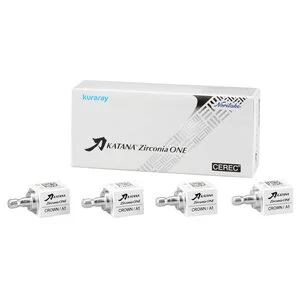
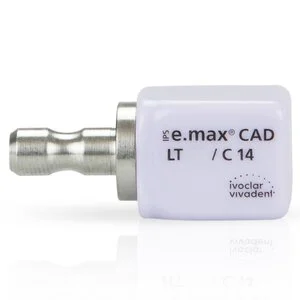
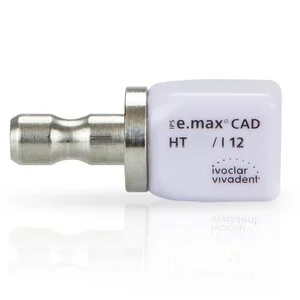
- Ceramic blocks: Popular for their lifelike translucency and strength, suitable for crowns, veneers, and inlays/onlays. Lithium disilicate is known for its high strength and esthetics, ideal for anterior and posterior restorations.
- Zirconia blocks: Delivers exceptional durability and fracture resistance, well-suited for crowns, bridges, and implant-supported restorations.
- Composite blocks: Easy to mill and adjust, often used for temporary and pediatric restorations.
- Hybrid Ceramics: Combine ceramic and polymer to achieve flexural strength and ease of polishing, making them good for single-unit restorations.
These options provide flexibility, allowing dentists to select the right material for each patient’s needs.
How long do CAD/CAM crowns last?
Research indicates that CAD/CAM restorations, specifically those made from lithium disilicate and monolithic zirconia, have survival rates comparable to or exceeding traditional PFM (Porcelain-Fused-to-Metal) crowns. Longevity depends heavily on proper preparation, design, material selection, and bonding protocol. Because the digital margin is often more precise, the risk of recurrent decay due to leakage can be reduced.