
Filter Products
Filter Products
Instruments


As low as
$45.08

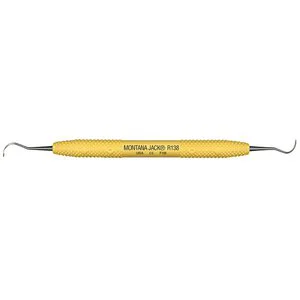


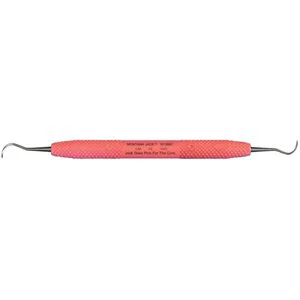



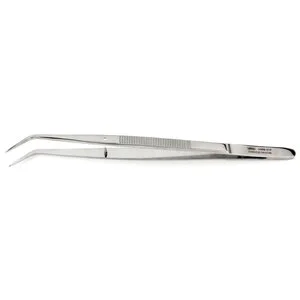
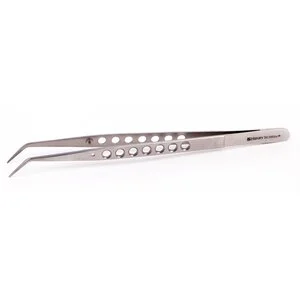







What are four basic instruments used in dentistry?
The basis of any diagnostic tray is a standardized four-piece setup. These basic instruments are universally used in general dentistry, orthodontics, periodontics, and endodontics. The standard four-piece setup includes:
- Dental Mouth Mirrors: Essential for visual access. They allow the clinician to see hard-to-reach areas, reflect light onto shadowed tooth surfaces, and safely retract the tongue or cheek during an examination.
- Explorers: Featuring a sharp, pointed tip, the explorer is used to detect tactile sensations on the tooth. It helps clinicians identify caries, calculus deposits, and structural anomalies in the enamel or dentin.
- Probes: This instrument features specific millimeter markings along its working end. Clinicians carefully insert it into the gingival sulcus to measure pocket depths, assess overall periodontal health, and discover potential attachment loss.
- Cotton Forceps (or Pliers): These specialized tweezers feature angled tips designed to precisely transfer materials, such as cotton rolls, wedges, or articulation paper, in and out of the oral cavity without compromising infection control.
What dental tools are commonly found in an operatory?
Beyond the basic four-instrument setup, a fully functioning operatory contains a wide array of specialized dental instruments. The exact tools required depend heavily on the specific procedure being performed. Common categories and their respective instruments include:
- Excavators: Specifically, the spoon excavator, which is used to manually remove softened, carious dentin from a cavity preparation before filling.
- Restorative Instruments: These include amalgam carriers, burnishers, pluggers, and composite placement instruments utilized to shape and polish restorative materials.
- Surgical Instruments: For extractions and oral surgery, practices utilize elevators, forceps, periotomes, and periosteals.
What instruments do dental hygienists use?
Dental hygienists use specialized instruments for preventive care, biofilm removal, and periodontal therapy. These precision tools must be well balanced and sharp to remove deposits effectively while protecting soft tissue. A typical setup contains mouth mirrors, probes, curettes, and scalers.
What is the difference between a curette and a scaler?
Curettes and scalers both remove calculus, but their designs determine where they are used.
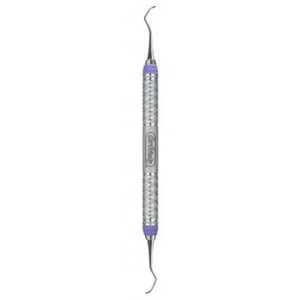
- Curettes: Featuring a semi-circular cross-section, one or two cutting edges, and a rounded toe and back, allowing safe use beneath the gumline without damaging sulcular tissue. Common types include universal curettes, designed for use throughout the mouth, and Gracey curettes, which are area-specific for targeted subgingival scaling and root planing.
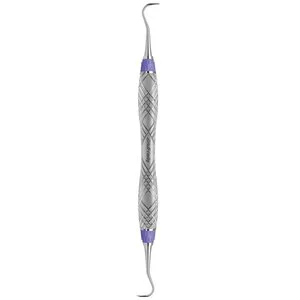
- Scalers: These instruments have a triangular cross-section, two cutting edges, and a pointed tip, so they are used only above the gumline. Common types include the sickle scaler and Jacquette scaler.
What is the purpose of a mouth mirror in dentistry?
Dental mouth mirrors are essential operatory instruments because they perform several functions. They provide indirect vision of hard-to-see areas, retract the tongue, lips, and cheek safely during treatment, and reflect light into dark posterior regions. They also support transillumination, helping clinicians spot interproximal decay or fractures as dark shadows in the enamel.