
Filter Products
Filter Products
Tooth Whitening
As low as
$45.00
- Free, fast shipping included
- No order minimum
- No subscription required
- No hidden fees


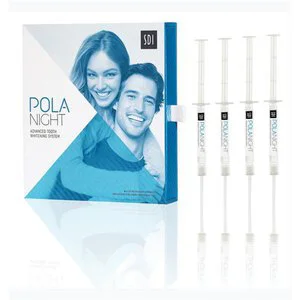




As low as
$70.27


As low as
$30.90


As low as
$152.99


As low as
$18.08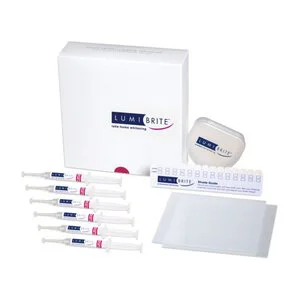

As low as
$170.08

What bleaching agents are used in professional teeth whitening?
The efficacy of professional teeth whitening depends on the chemical breakdown of bleaching agents. Dental professionals mainly use two active ingredients: hydrogen peroxide and carbamide peroxide. Knowing how each performs helps practices select the right gel for both in-office and take-home whitening, based on treatment goals, patient sensitivity, and scheduling needs.
- Hydrogen peroxide acts quickly and is used in high-concentration gels (25%–40%) for in-office whitening. It penetrates the enamel quickly, oxidizes deep stains, and delivers a visible change in shade in 45–60 minutes.
- Carbamide peroxide is released slowly and is primarily used for professional take-home whitening with custom trays. A 30% formula delivers about 10% hydrogen peroxide. This supports gradual whitening under supervision and is an option for patients with sensitivity.
Why is managing patient expectations important in professional teeth whitening?
A teeth-whitening dentist improves patient satisfaction by setting clear expectations from the start. Professional whitening often delivers stronger results than over-the-counter products, but individual biology, existing dental work, and the source of discoloration all influence the final shade.
- Before in-office whitening, the dental team completes a clinical assessment.
- The provider records the baseline shade with a standardized guide and intraoral photos.
- The provider identifies the type of discoloration before recommending treatment.
- Extrinsic stains from coffee, tea, red wine, and tobacco often respond well to peroxide whitening.
- Intrinsic stains, especially those related to tetracycline or trauma, are less predictable and may require extended treatment or other alternatives such as bonding or porcelain veneers.
- The dental team also evaluates tooth-colored restorations, including composite fillings, crowns, and bridges.
- Bleaching agents do not change the color of restorations. Patients should know that fillings, crowns, or bridges may need replacement after whitening to match the new shade.
- Effective communication about expected results, timing, and limitations helps build trust and reduce post-treatment dissatisfaction.
How do safety profiles and advanced sensitivity-management protocols support better whitening outcomes?
Patient comfort is central to successful in-office whitening, and protecting it depends on three essentials: effective soft-tissue isolation, clear sensitivity management guidelines, and practical pre- and post-treatment care. Because high-concentration whitening gels are potent, dental teams need a consistent process to ensure reliable results while reducing the risk of soft-tissue irritation and acute tooth sensitivity.
- In-office whitening requires effective soft-tissue isolation. Dental professionals protect the gums, lips, and oral mucosa with cheek retractors, cotton rolls, and a light-cured gingival barrier resin, assuring precise placement of the barrier to seal the gingival margins and expose only the clinical crown.
- Tooth sensitivity is the most common side effect of professional whitening, commonly appearing as brief, sharp “zingers.” Practices support patient comfort with defined protocols that address sensitivity before, during, and after treatment.
- Sensitivity management begins before whitening and continues after treatment. Pre-treatment agents containing potassium nitrate and fluoride help reduce discomfort by calming pulpal nerve endings and occluding dentinal tubules, while a post-treatment desensitizing gel additionally improves comfort. Patients may also use sensitive toothpaste for two weeks before treatment and avoid very hot or cold foods and drinks afterward.
What key factors do dental practices consider when choosing a light-activated teeth whitening system?
Many in-office whitening systems use light to activate the gel and speed whitening. LED or UV lights work with peroxide formulas. Dental teams often achieve strong results in less chair time.
When choosing a light-activated whitening system, practitioners consider ease of positioning, even light distribution, and gel compatibility. Good equipment supports smooth appointments, consistent whitening, and efficient workflow for busy offices.
How can dental practices help patients maintain their professional teeth whitening results?
The journey does not end when the patient leaves the chair with a brighter smile. Post-treatment retention strategies are important for securing long-lasting results and building ongoing patient loyalty.
After in-office whitening, patients enter a critical rehydration phase. Enamel is more prone to staining for 48 hours, so patients ought to follow a strict white diet and avoid dark foods and drinks, including coffee, tea, red wine, berries, and tomato-based sauces.
To help maintain results, offer take-home whitening kits with custom trays and lower-strength carbamide peroxide gel. Patients can use these at home every few months. This is convenient, as patients can buy gel refills during hygiene visits.