
Filter Products
Filter Products
Impression Materials & Accessories




As low as
$59.01



As low as
$120.67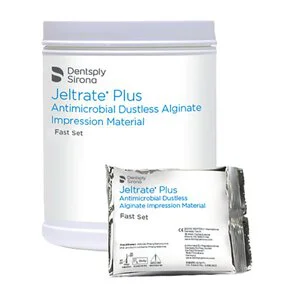




What is a dental impression?
A dental impression is a negative record of the mouth’s hard and soft tissues used to create a positive model of the patient’s oral anatomy. It is essential for making accurate restorations and appliances. Depending on the procedure, dental professionals generally use three main types of impressions:
- Primary Impressions: Often referred to as preliminary impressions, these are typically taken to create diagnostic casts, custom trays, or provisional restorations. They require a material that is easy to manipulate and captures general anatomy, such as alginate.
- Final Impressions: These require exceptional accuracy to capture the finest details of the tooth preparation, margins, and surrounding tissue. Final impressions are sent to the dental lab to fabricate indirect dental restorations like crowns, bridges, veneers, and implant prostheses.
- Bite Registrations: This type of impression captures the occlusal relationship between the maxillary and mandibular arches. It ensures the dental lab understands exactly how the patient's upper and lower teeth meet, which is essential for establishing proper occlusion in the final restoration.
How are impression trays selected for dental procedures?
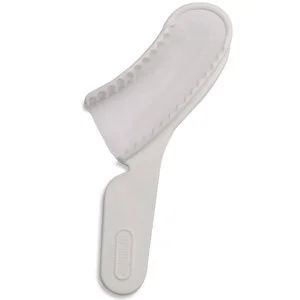
An impression tray is a rigid dental device that holds and controls impression material in the mouth as it sets, helping reduce distortion during removal. Choosing the right tray is important for accurate results and an efficient workflow. The two main types are stock trays and custom trays, each appropriate to different procedures, accuracy needs, and clinical setups.
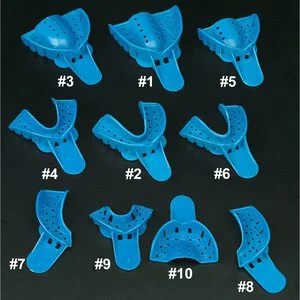
- Stock trays are pre-manufactured in standard sizes and shapes for most patients. Available in reusable metal or disposable plastic, they may be perforated to retain impression material or solid and used with adhesive. They are commonly used for primary impressions, orthodontic models, and routine restorative procedures.
- Custom trays are made for each patient from a diagnostic cast after the primary impression. Usually formed from light-cured acrylic or composite resin, they create a more even layer of impression material, reducing shrinkage and improving dimensional stability. They are especially valuable in complex cases, including full-arch implant impressions and complete dentures, where accurate, distortion-free detail is critical.
What Are the Types of Dental Impression Materials?
Dental offices can choose from several impression materials based on the procedure, level of detail required, working time, and overall workflow. Understanding the main options helps clinicians and teams select the right products for preliminary impressions, final impressions, dentures, orthodontic appliances, and implant cases while keeping the office efficient and cost-conscious.
Traditional and Preliminary Materials
- Alginate (Irreversible Hydrocolloid): Alginate remains one of the most widely used dental impression materials for preliminary impressions. It is economical, easy to mix, and generally comfortable for patients. Because it has limited dimensional stability and should be poured quickly, it is best suited for study models, opposing arch impressions, orthodontic retainers, and other primary impression needs.
- Alginate Alternatives: Alginate alternatives are often chosen when a practice wants improved dimensional stability, cleaner handling, or extended pour times compared with traditional alginate. They can support greater flexibility in the office workflow while still serving many preliminary impression applications.
- Impression Compound: Impression compound is a rigid, non-elastic thermoplastic material used primarily in complete denture procedures. It softens when heated and hardens when cooled, making it useful for border molding and for capturing edentulous ridges with functional accuracy.
Elastomeric Impression Materials
For final impressions that require high precision, elastomeric impression materials remain a standard choice. These rubber-based materials are valued for detail reproduction, elastic recovery, and dimensional stability. The main elastomeric types include:
- Polysulfide: An older elastomeric material with long working time and flexibility in deep undercuts, though its odor, slower set, and necessity for rapid pouring have reduced its use.
- Silicone: Broadly continues to play an important role, especially in final impression workflows where accuracy and handling matter most.
- Polyether: A naturally hydrophilic material known for strong detail capture and stability, especially for full-arch and implant impressions, though it sets rigid in undercut cases.
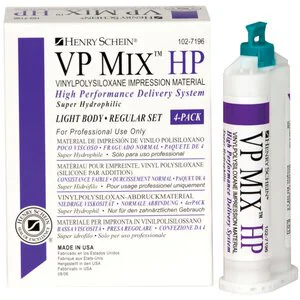
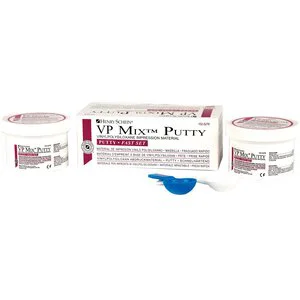
- Vinyl Polysiloxane (VPS): A widely used final impression material that offers excellent stability, precise detail reproduction, and multiple viscosities and setting times.
In addition to these categories, silicone materials broadly continue to play an important role, especially in final impression workflows where accuracy and handling matter most. By knowing the strengths of alginate, alginate alternatives, impression compound, VPS, polyether, silicone, and other impression materials, dental practices can make practical purchasing decisions that support both clinical quality and day-to-day efficiency.
Are Digital Impressions the Modern Alternative?
As practices seek latest solutions to improve efficiency, digital technology in dentistry has modernized the impression process. Digital impressions use a handheld intraoral scanner to capture thousands of highly accurate images of the teeth and oral tissues, which are stitched together to create a precise 3D model on a computer screen.
Digital impressions replace trays and messy materials in many restorative procedures, elevating patient comfort and reducing gag reflex. They let clinicians review preparation margins on-screen immediately and send files to the lab right away, which speeds up final restorations. Although scanners require a greater upfront investment, they can lower material costs and reduce retakes over time.